
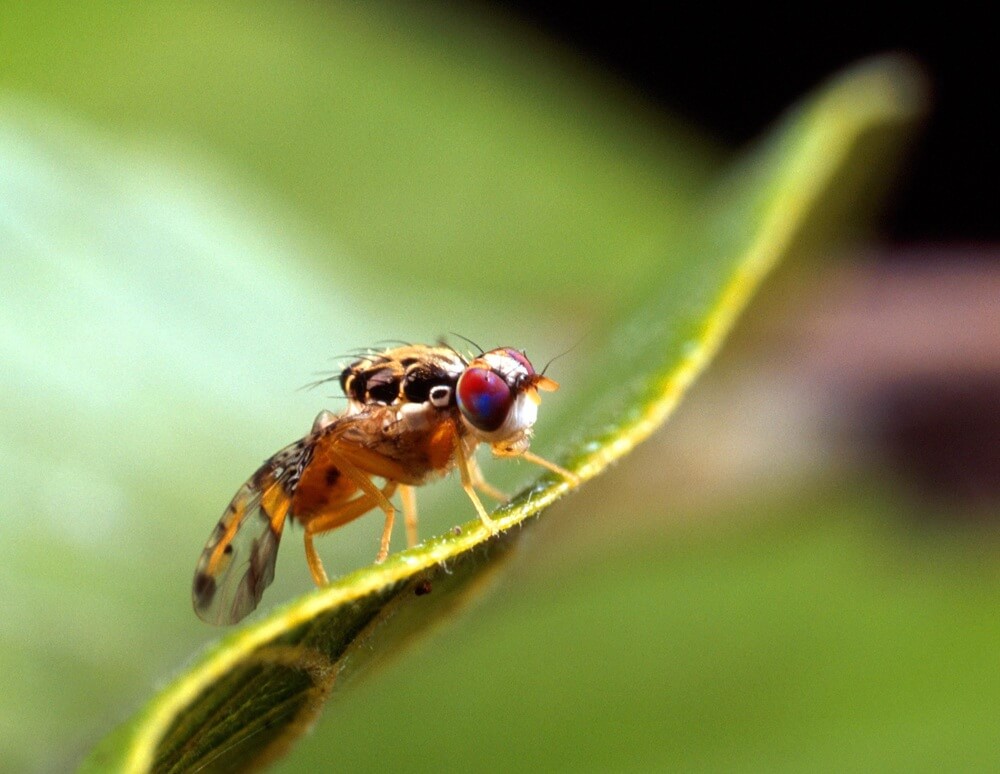
The U.S. Department of Agriculture's Animal and Plant Health Inspection Service (APHIS), working with the California Department of Food and Agriculture (CDFA), removed the Mediterranean fruit fly quarantine in Alameda and Santa Clara Counties, California. The change was announced in NAPPO Official Pest Report 1205, posted on August 18, 2026, and took effect immediately.
The area was designated the Santa Clara quarantine. Its removal released 241 square miles from quarantine, including 58.76 acres of commercial agriculture. This is a dated regulatory update following a completed eradication effort, rather than evidence that Mediterranean fruit fly pressure has broadly changed in every production area.
The report states that APHIS originally restricted interstate movement of regulated articles from the area to prevent the pest from spreading to non-infested parts of the country. APHIS and CDFA then eradicated the transient Mediterranean fruit fly population using approved program control methods.
Under IPPC Standards, the official pest status stated in the report is: absent and eradicated in the United States.
What the quarantine removal means
The action marks the end of the specified Santa Clara quarantine in Alameda and Santa Clara Counties. The most direct operational consequence is that the 241-square-mile area identified in the report was released from the restrictions associated with that quarantine. The figure includes 58.76 acres of commercial agriculture, linking the regulatory change to both urban and agricultural land within the former boundary.
The sequence described by NAPPO is important. Movement restrictions were introduced to reduce the risk of spread from the regulated area. The agencies subsequently applied approved program control methods and reported the transient population eradicated. The quarantine removal followed that outcome.
This wording should not be expanded into claims that are absent from the official report. The source does not provide a universal monitoring schedule, a trap-density recommendation, or a product-specific account of the eradication work. It documents the agencies involved, the quarantine area released, the reason restrictions had been imposed, and the resulting pest status.
Pest and host context
Mediterranean fruit fly, Ceratitis capitata, belongs to the family Tephritidae in the insect order Diptera, according to the EPPO Global Database datasheet. Exact scientific identification matters in surveillance and procurement because product matching should follow the catalog's listed target pest rather than a general fruit-fly category.
EPPO's host records include numerous Citrus species, including Citrus maxima, Citrus reticulata, and Citrus × aurantium. That host breadth helps explain why Mediterranean fruit fly is relevant to plant-health and horticultural surveillance, although the NAPPO quarantine-removal report does not attribute this particular event to any one crop or host.
The two official sources also serve different purposes. NAPPO provides the dated U.S. regulatory event and its official pest-status statement. EPPO provides taxonomic, host, and distribution context. EPPO's distribution record lists the United States as present with restricted distribution and records California as transient, with that entry last updated August 7, 2026. Those database descriptors should be read as background records alongside, not as replacements for, the later August 18 NAPPO announcement.
A direct catalog match for Ceratitis capitata
ECOPHERO's catalog directly associates tert-butyl 4-chloro-2-methylcyclohexane-1-carboxylate with Ceratitis capitata.
- Product: tert-butyl 4-chloro-2-methylcyclohexane-1-carboxylate
- CAS number: 12002-53-8
- Catalog target pest: Ceratitis capitata
- Match type: Direct catalog match
The scientific pest name and CAS number provide precise identifiers for technical and procurement discussions. They also keep the product connection within the evidence available: the catalog lists the product against C. capitata, while the NAPPO report documents the California quarantine removal.
The product match should not be interpreted as evidence that this ingredient was used in the Santa Clara eradication program. The official report says the transient population was eradicated using approved program control methods, but it does not identify this product or describe a pheromone-based component. Product evaluation, lure configuration, placement, servicing, and interpretation must remain aligned with the applicable official program and local protocol.
Keeping surveillance and regulatory outcomes distinct
The California update illustrates why surveillance information and regulatory decisions must be communicated separately. A pest-matched semiochemical ingredient can support technical evaluation for monitoring applications, but quarantine removal is an official decision based on the responsible agencies' program evidence. A product match alone neither establishes pest absence nor authorizes a change in quarantine status.
For teams discussing future C. capitata surveillance, the useful catalog identifiers are the exact chemical name and CAS 12002-53-8. For teams interpreting the August 18 event, the controlling facts are the removal of the Santa Clara quarantine, the release of 241 square miles, and the agencies' reported eradication of the transient population.
ECOPHERO supplies pheromone active ingredients for pest-monitoring applications. To discuss tert-butyl 4-chloro-2-methylcyclohexane-1-carboxylate for Ceratitis capitata, contact us with the product name, pest name, or CAS 12002-53-8 so the intended technical requirements can be reviewed.
Sources and image credit
- NAPPO Official Pest Report 1205 — “Ceratitis capitata (Mediterranean Fruit Fly): APHIS Removes Quarantine Areas in Alameda and Santa Clara Counties, California”
- EPPO Global Database — Ceratitis capitata overview
- EPPO Global Database — Ceratitis capitata distribution
- EPPO Global Database — Ceratitis capitata host plants
- EPPO Global Database — Ceratitis capitata datasheet
- Male Mediterranean fruit fly image and public-domain license evidence — Scott Bauer, U.S. Department of Agriculture

