
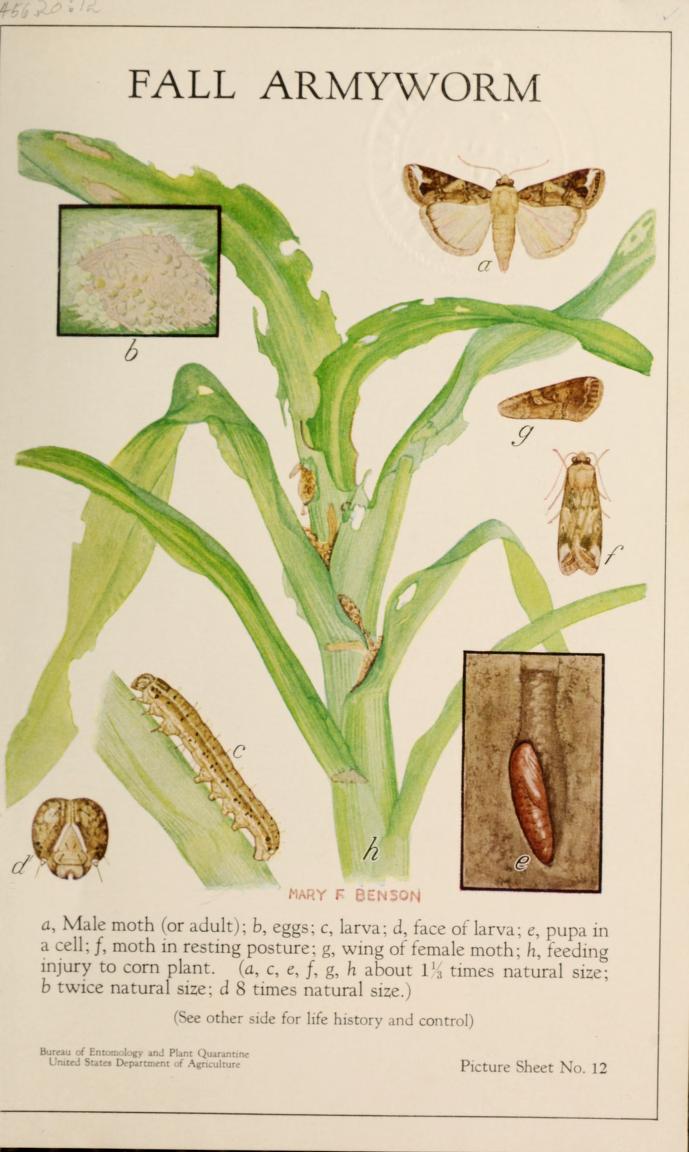
Fall armyworm (Spodoptera frugiperda) is listed in the EPPO Global Database under EPPO Code LAPHFR. EPPO's distribution record shows global presence across Africa, the Americas, Asia, Europe, and Oceania, with the distribution page last updated on 2026-04-16.
For growers, crop advisors, and plant-health teams working across different production regions, timely surveillance is essential. Knowing when and where adult moths are active supports earlier field decisions before larval pressure builds. Pheromone-based monitoring is a practical first step.
Why it matters
Fall armyworm is one of the most mobile and damaging lepidopteran pests in global agriculture. The species feeds on a wide range of crops, with maize (corn) being the primary host, along with sorghum, rice, millet, and various vegetable and cotton crops. Larvae feed on leaves, tassels, and ears, and heavy infestations can cause significant yield loss in a single generation. Because fall armyworm moths are strong fliers, they can colonise new areas rapidly as weather patterns and crop cycles shift through the season.
The EPPO distribution record confirms presence across five continents, which means that growers in virtually every major maize- and row-crop-producing region face potential pressure during the spread season. For regions where fall armyworm is already established, the challenge is managing seasonal outbreaks. For regions where it is still expanding its range, the challenge is early detection. In both cases, monitoring is the practical starting point.
How the pheromone works
Fall armyworm females release a sex pheromone to attract males for mating. Synthetic versions of these chemical compounds, deployed in traps, draw male moths by mimicking the female signal. When field teams check the traps, the catch data reveals when and where adult flight activity is occurring — information that directly informs treatment timing, scouting intensity, and management decisions.
The relevant pheromone blend for Spodoptera frugiperda consists of (Z)-9-Tetradecenyl acetate and (Z)-7-Dodecen-1-yl acetate. This blend is used in monitoring and mass-trapping programmes, deployed through monitoring traps. In a monitoring context, low-density trap networks provide early-warning data on moth flights. In a mass-trapping context, higher trap densities are used as a population management component where programmes are designed for that purpose.
The ECOPHERO solution
ECOPHERO supplies the pheromone actives for fall armyworm monitoring and mass-trapping programmes:
- Active 1: (Z)-9-Tetradecenyl acetate, CAS 16725-53-4
- Active 2: (Z)-7-Dodecen-1-yl acetate, CAS 14959-86-5
- Mode: Monitoring / mass trapping
- Application: Monitoring traps
- Standard purities: 90% / 95% / 98%
- Custom ratios and formulations available
This active blend supports pheromone-based detection wherever fall armyworm monitoring is required — across maize and row-crop regions on every continent. ECOPHERO provides technical-grade active ingredients for procurement teams, researchers, lure formulators, and crop-protection partners developing or deploying trap-based monitoring and mass-trapping programmes. Custom ratios and formulations are available for specific regional programmes or research applications.
How pheromone monitoring supports decisions
For fall armyworm, pheromone traps should be treated first as decision-support tools. EPPO's datasheet highlights monitoring and early warning as part of coordinated fall armyworm management, while the distribution record shows why region-specific surveillance matters. Trap catch data helps growers and advisors understand adult flight activity, focus scouting, and time any required field action. Where programmes are specifically designed for it, the same pheromone blend can also support mass-trapping strategies.
ECOPHERO capability + CTA
ECOPHERO manufactures pheromone active ingredients from gram to ton scale. If the active ingredient you need is not in the catalogue, we make it. Contact us with the pest name or CAS number for a quote, lead time, and specification.
Sources
- EPPO Global Database — Spodoptera frugiperda overview: https://gd.eppo.int/taxon/LAPHFR
- EPPO Global Database — Spodoptera frugiperda distribution: https://gd.eppo.int/taxon/LAPHFR
- EPPO Datasheet — Spodoptera frugiperda: https://gd.eppo.int/taxon/LAPHFR/datasheet
- Cover image credit: Mary Foley Benson / Bureau of Entomology, USDA, 1941. Public domain. License URL: https://commons.wikimedia.org/wiki/File:Fall_Armyworm_by_Mary_F._Benson.jpg
