
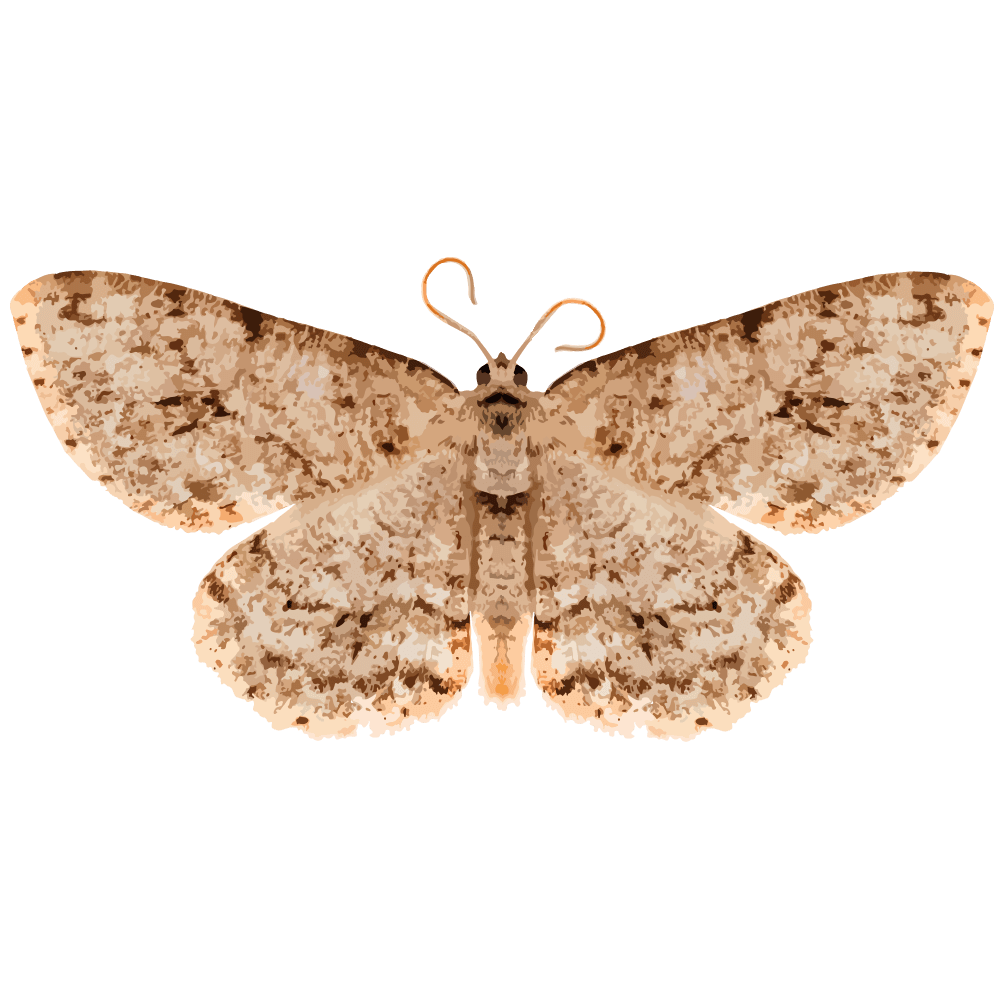
| Nom latin | Ectropis obliqua |
| Nom commun | Tea geometrid moth |
| Biologie | Adult moths are nocturnal and phototactic, ovipositing on the undersides of tea leaves. Larvae feed on tea foliage: early instars chew mesophyll, creating translucent blotches, while later instars consume notched edges—severely defoliating entire plants and impacting tea yield and quality. This pest produces 5-6 generations annually, overwintering as pupae in soil. |
| Dégâts | This pest primarily damages tea plants. |
| Régions de distribution | East Asia |
| Surveillance | Pheromone lures mimic natural sex pheromones to attract male insects into specialized traps for population monitoring and suppression. As a core IPM component, monitoring enables early risk detection and targeted control. Mass trapping reduces mating opportunities to curb offspring populations. Protocols: ●Use only with matched traps. ●15-45 traps/hectare,replace/replenish every 4-6 weeks. ●Wear gloves or wash hands with detergent when switching lure types. ●Refer to trap-specific hanging instructions. |
| Pièges recommandés | Delta Trap, Wing Trap |
Partagez vos coordonnées pour recevoir des solutions à phéromones adaptées avec précision. Si notre portefeuille existant ne propose pas la solution optimale, notre équipe de chimie de synthèse lancera un développement sur mesure – de la conception de la structure moléculaire à la production à grande échelle.
