
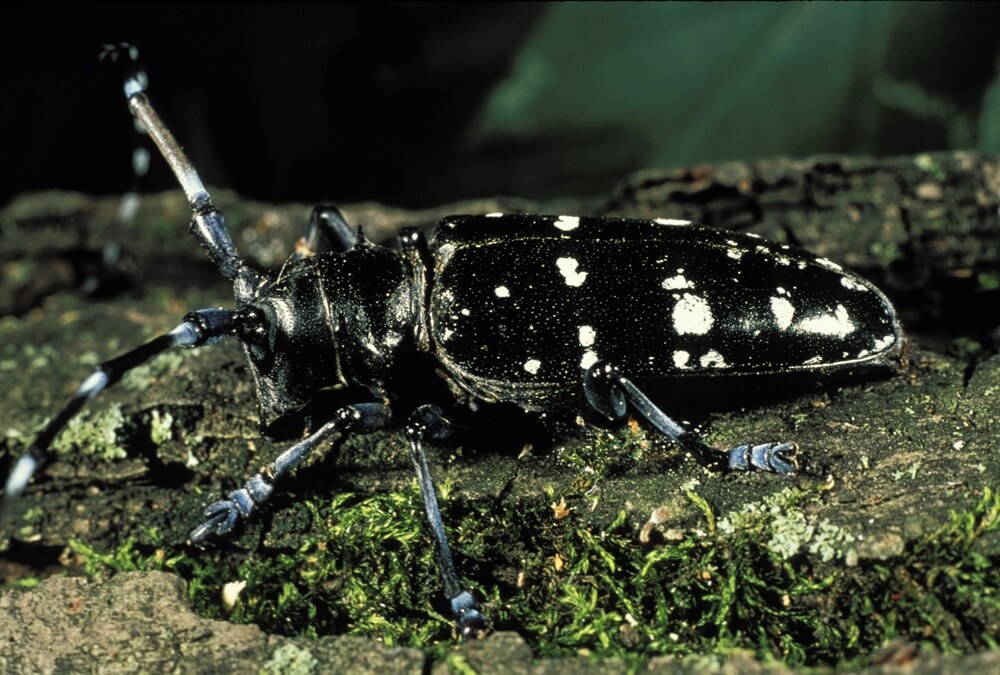
The Animal and Plant Health Inspection Service (APHIS) removed 7.4 square miles from the Asian longhorned beetle quarantine in Nassau and Suffolk Counties, New York, according to NAPPO Official Pest Report 1202, posted on August 14, 2026. The change applied immediately and followed final surveys of host trees by the Asian longhorned beetle eradication program.
The adjustment covered several separate areas. APHIS removed 0.8 square miles in the Town of Oyster Bay in Nassau County. In the Town of Babylon, the areas comprised 2.4 square miles in the north and 0.7 square miles in the south. A further 3.5 square miles in the Town of Huntington in Suffolk County were also removed from quarantine. Together, those areas account for the reported 7.4-square-mile reduction.
This is a dated change to the boundaries of an official-control program, not a declaration that the pest has been eliminated from New York or the United States. The official pest status stated in the report is: present: not widely distributed and under official control in the United States.
Why the quarantine update matters
Asian longhorned beetle (Anoplophora glabripennis) is a destructive wood-boring pest. The NAPPO report states that it threatens 12 genera of hardwood trees in North America, including maple. That breadth of hosts makes careful delimitation important: quarantine boundaries are intended to focus official controls around areas where the pest remains a concern, while survey evidence can support the removal of areas that meet program requirements.
The August 2026 action shows how sustained field evidence informs those boundaries. APHIS made the removal after the eradication program completed final surveys of host trees. The report therefore represents a specific regulatory update based on completed survey work. It should not be read as evidence that surveillance can stop in the wider program area.
The pest also has a long history in New York. According to the official report, Asian longhorned beetle was first discovered in the United States in New York in August 1996. The latest boundary adjustment comes three decades after that first discovery and illustrates the long time horizon that invasive wood-borer programs may require.
Host trees and the wider distribution context
The EPPO Global Database describes A. glabripennis as originating in the Far East and as introduced into Europe and North America, where it is under eradication. EPPO also lists multiple Acer species—maples—as major hosts. These background facts align with the NAPPO report's emphasis on hardwood trees and maple in particular.
Host-tree surveys are central to the reported New York decision. For a wood-boring insect associated with multiple hardwood genera, survey teams must work across the relevant host landscape rather than assess only a single tree species. The fact that final host-tree surveys preceded the quarantine reduction is therefore an important part of the event: the regulatory change followed structured field work, not simply the passage of time.
A catalog-backed pheromone ingredient for the target pest
ECOPHERO's catalog directly associates 4-(heptyloxy)butanal with Anoplophora glabripennis.
- Product: 4-(heptyloxy)butanal
- CAS: 65885-35-0
- Target pest: Anoplophora glabripennis
The product connection is catalog-backed and specific to the scientific pest name reported in New York. It is separate from the evidence behind this particular quarantine adjustment: NAPPO attributes the removal to final surveys of host trees, and the report does not say that a pheromone product was used to make the decision. Keeping those points distinct matters when planning or communicating surveillance work.
For programs evaluating semiochemical tools for Asian longhorned beetle work, the pest name and CAS number provide clear identifiers for technical discussions and procurement inquiries. Monitoring design, lure configuration, deployment, and interpretation should remain aligned with the applicable official program and local protocols.
What to take from the report
The immediate operational fact is a narrower quarantine footprint in parts of Nassau and Suffolk Counties as of August 14, 2026. The underlying reason was completion of final host-tree surveys in the areas removed. At the same time, the official U.S. status continues to describe Asian longhorned beetle as not widely distributed and under official control, so the update should be understood as progress within an ongoing control framework.
ECOPHERO supplies pheromone active ingredients for pest-monitoring applications. To discuss 4-(heptyloxy)butanal for A. glabripennis, contact us using the product name, pest name, or CAS 65885-35-0 so the technical requirements can be reviewed against the intended program.
Sources
- NAPPO Official Pest Report 1202, “Anoplophora glabripennis (Asian Longhorned Beetle): APHIS Removes Portions of Nassau and Suffolk Counties, New York”: https://www.pestalerts.org/nappo/official-pest-reports/1202/
- EPPO Global Database — Anoplophora glabripennis: https://gd.eppo.int/taxon/ANOLGL
