
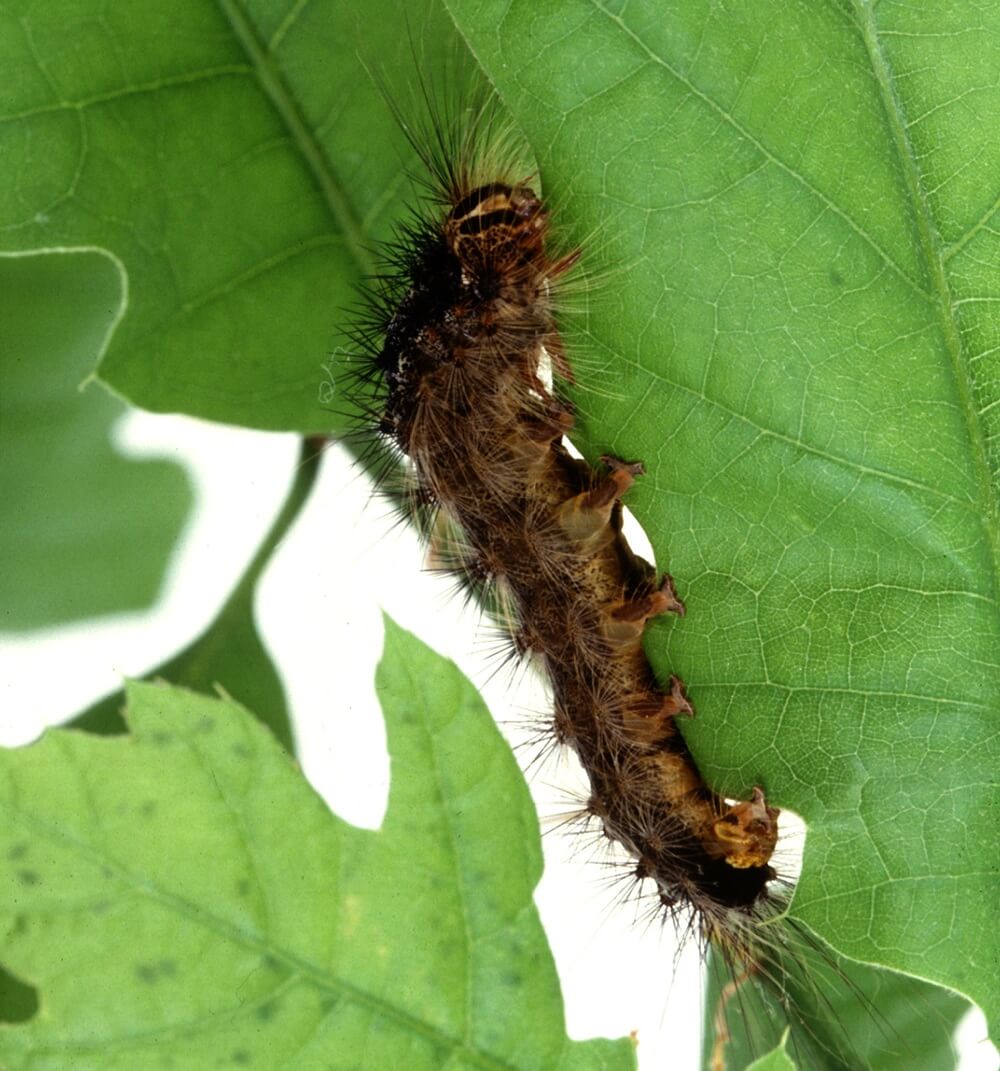
On May 1, 2026, USDA APHIS and the state of Wisconsin expanded the quarantined area for spongy moth, Lymantria dispar, by adding Green and Sawyer Counties in Wisconsin. The official notice was published as NAPPO Official Pest Report 1197.
The reason for the expansion was direct: moth populations in Green and Sawyer Counties reached the threshold to trigger quarantine expansion. The action was effective immediately.
Spongy moth is a destructive insect of approximately 300 species of trees and shrubs. That is why a county-level quarantine update matters beyond the administrative boundary. It signals that a monitored pest population has reached an official response threshold, and it gives surveillance and control teams a clear pest, place, and date to plan around.
For ECOPHERO customers, the pest identity is the key technical link. The matched active ingredient for Lymantria dispar is (Z)-7,8-Epoxy-2-Methyloctadecane, commonly known as Disparlure, with CAS 29804-22-6. The supplied product match lists the mode as mating disruption / monitoring and the application as mating disruption dispensers and monitoring traps for spongy moth.
In practical terms, this is a pheromone-led response tool for programs that need to detect or manage spongy moth presence. Monitoring traps support surveillance by using the matched active in trapping programs. Mating disruption dispensers use the same pest-specific pheromone active in a different deployment format, supporting mating disruption rather than eradication claims.
The ECOPHERO solution
- Active: (Z)-7,8-Epoxy-2-Methyloctadecane, Disparlure
- CAS: 29804-22-6
- Target pest: Spongy moth, Lymantria dispar
- Mode: Mating disruption / monitoring
- Application: Mating disruption dispensers and monitoring traps for spongy moth
The Wisconsin quarantine expansion is a useful example of why pest-specific pheromone chemistry matters. The official report identifies the pest, the affected counties, and the quarantine trigger. The product match then connects that pest to a defined active ingredient and CAS number, so procurement and formulation discussions can start from a precise technical basis.
ECOPHERO manufactures pheromone active ingredients for gram-to-ton custom synthesis. For spongy moth programs, contact us with the pest name, Lymantria dispar, or CAS 29804-22-6 for a quote.
Sources
