
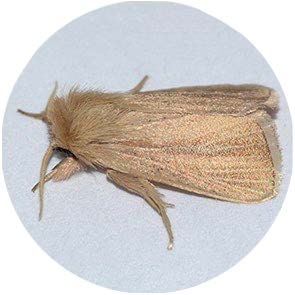
| Lateinischer Name | Sesamia inferens |
| Trivialname | Pink rice stem borer |
| Biologie | Adults are nocturnal, exhibit phototaxis, and prefer to lay eggs on tall, dense vegetation. Larvae bore into the stems of rice, corn, and other crops: newly hatched larvae cluster inside leaf sheaths to feed, forming "dead sheaths," while older larvae later bore into stems, causing "dead hearts" and "white panicles." This pest is relatively cold-tolerant, with 3-4 generations per year in the Yangtze River Basin and southern regions, and thrives in humid environments. |
| Schaden | This pest primarily damages Poaceae crops such as rice, corn, and sorghum, and can also harm sugarcane and reeds. |
| Verbreitungsgebiete | China and South Asia |
| Monitoring | Pheromone lures mimic natural sex pheromones to attract male insects into specialized traps for population monitoring and suppression. As a core IPM component, monitoring enables early risk detection and targeted control. Mass trapping reduces mating opportunities to curb offspring populations. Protocols: ●Use only with matched traps. ●15-45 traps/hectare,replace/replenish every 4-6 weeks. ●Wear gloves or wash hands with detergent when switching lure types. ●Refer to trap-specific hanging instructions. |
| Empfohlene Fallen | Delta Trap, Wing Trap |
Teilen Sie Ihre Kontaktinformationen, um präzise passende Pheromonlösungen zu erhalten. Sollte unser bestehendes Portfolio keine optimale Lösung bieten, initiiert unser Synthesechemie-Team eine kundenspezifische Entwicklung – vom Molekülstrukturdesign bis zur skalierten Produktion.
