
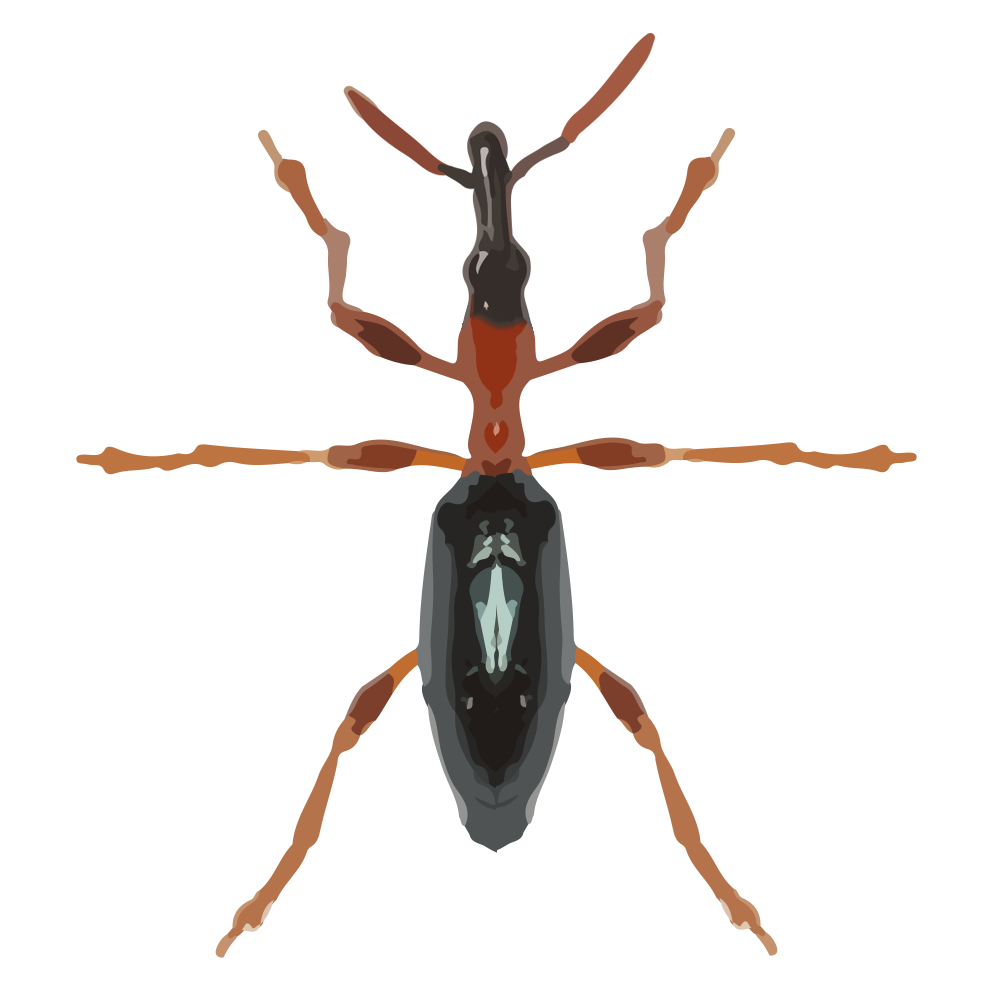
| 학명 | Cylas formicarius |
| 일반명 | sweet potato weevil |
| 생태 | Adults resemble ants, exhibiting strong mobility in climbing and flight, with feigning death behavior. They lay eggs on sweet potato tubers or seedling roots. Larvae tunnel through sweet potato tubers and stems, causing rotting and producing distinct foul odors that severely degrade tuber quality and yield. Completing 3–8 generations annually, this pest overwinters as adults in field weeds, soil crevices, or storage pits. |
| 피해 | This pest primarily damages sweet potatoes (Ipomoea batatas), it also attacks other Convolvulaceae plants like water spinach (Ipomoea aquatica). |
| 분포 지역 | Tropical agricultural regions |
| 모니터링 | Pheromone lures mimic natural sex pheromones to attract male insects into specialized traps for population monitoring and suppression. As a core IPM component, monitoring enables early risk detection and targeted control. Mass trapping reduces mating opportunities to curb offspring populations. Protocols: ●Use only with matched traps. ●15-45 traps/hectare,replace/replenish every 4-6 weeks. ●Wear gloves or wash hands with detergent when switching lure types. ●Refer to trap-specific hanging instructions. |
| 추천 트랩 | Delta Trap, Wing Trap |
연락처를 남겨 주시면 정밀하게 매칭된 페로몬 솔루션을 받아보실 수 있습니다. 기존 포트폴리오에 최적의 제품이 없을 경우, 당사 합성화학 팀이 분자 구조 설계부터 규모화 생산까지 맞춤 개발을 시작합니다.
