
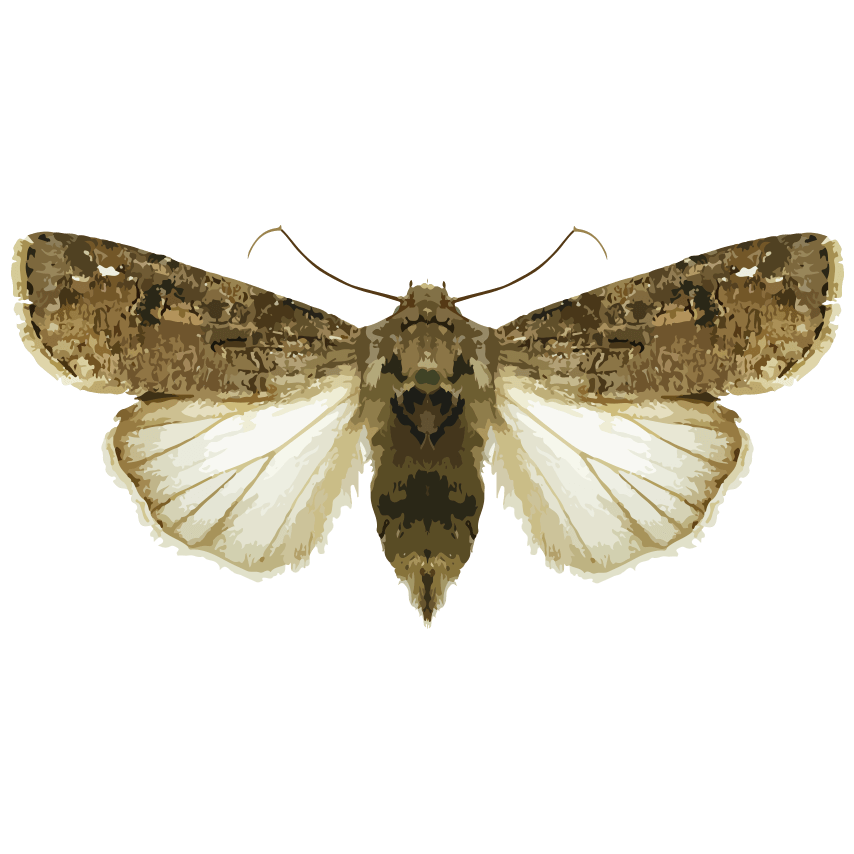
| Nombre latino | Agrotis segetum |
| Nombre común | Turnip moth |
| Biología | Adults are nocturnal and attracted to black light traps and sugar-vinegar solutions, laying eggs in the soil near the roots of crops. Larvae hide during the day and emerge at night to feed on the stems and roots of crop seedlings, causing gaps in seedling stands or broken rows. This pest completes 2-4 generations annually, overwintering as larvae or pupae in the soil. |
| Daño | This pest damages multiple crops such as cotton, corn, and vegetables. |
| Regiones de distribución | Eurasia |
| Monitoreo | Pheromone lures mimic natural sex pheromones to attract male insects into specialized traps for population monitoring and suppression. As a core IPM component, monitoring enables early risk detection and targeted control. Mass trapping reduces mating opportunities to curb offspring populations. Protocols: ●Use only with matched traps. ●15-45 traps/hectare,replace/replenish every 4-6 weeks. ●Wear gloves or wash hands with detergent when switching lure types. ●Refer to trap-specific hanging instructions. |
| Trampas recomendadas | Delta Trap, Wing Trap |
Comparta su información de contacto para recibir soluciones de feromonas de precisión. En caso de que nuestra cartera existente no se adapte de forma óptima, nuestro equipo de química sintética iniciará el desarrollo personalizado, desde el diseño de la estructura molecular hasta la producción a escala.
